Things
Music I heard with you was more than music,
And bread I broke with you was more than bread;
Now that I am without you, all is desolate;
All that was once so beautiful is dead.
Your hands once touched this table and this silver,
And I have seen your fingers hold this glass.
These things do not remember you, beloved,
And yet your touch upon them will not pass.
For it was in my heart you moved among them,
And blessed them with your hands and with your eyes;
And in my heart they will remember always,
They knew you once, O beautiful and wise.
– Conrad Aiken (1889-1973)
Most of us accumulate a lot of ‘things’ during our lifetime (some of us more than others!) While there are a few ‘ascetics’ out there who, like Ghandi, could fit all their worldly possessions into a four foot square space, many of us will leave behind a great number of personal effects when we die. Clothing, jewelry, books and papers, photographs, letters, the creations of our hands or hobbies, music, art, awards and honours or evidence of our life’s work; all are things upon which your beloved’s touch ‘will not pass’ for they were ‘blessed with their hands and with their eyes.’
Deciding what to do with your loved one’s things can be one of the most poignant, painful and emotionally difficult tasks of grieving, and it is an important part of the grieving process and not simply a logistical job you must tackle because someone has died.
To compound the emotional intensity of going through a loved one’s things, it is easy to become overwhelmed by the sheer enormity of the task. While some of us may have had the time or inclination to ‘simplify’ or downsize, many of us leave an astonishingly large number of effects for our spouse to go through, all the more so if death was sudden or unexpected. When I first opened my husband’s closet, I thought of the line in Luke 3:11 that says if you have two coats, give one to the poor. Peter definitely did not live his life according to that Bible verse (and neither have I by the way!)
There’s no doubt that many of us in the Global North accumulate more of everything than we need. And once someone no longer needs any of their things, you are presented with the stark reality of what to do with them. Through trial and error (both my own and that of many others that I know) I have come to believe that this process may be rendered less painful by asking yourself a few clarifying questions.
When – Now, Soon, Later or Maybe Never?
Ask yourself what feels right to you about the timing of sorting through your beloved’s things. Are there reasons for you to get going immediately (perhaps financial because you need to sell his car or emotional because you just can’t walk into his home office without dissolving into tears every time?) or are there things that can be postponed for a later date (just closing that office door until you feel more ready to tackle the job)? Even dividing the tasks into ‘Now’ ‘Soon’ ‘Later’ or ‘Never’ might make you feel a little more able to face them.
And it’s easy to make mistakes in timing. I know widows who cleared out all their husbands’ things almost immediately and really came to regret it. Of course, we also don’t want to end up as Miss Havisham, years later with clocks stopped and everything as it was frozen in time at the moment of our loss! We’re seeking the ‘Goldilocks zone’ of letting go – not too soon nor too late but ‘just right.’ There’s no rule or timetable that says you must do this by this date. These are tasks of the heart and will take as long as they require.
And you may choose to leave some things the way they are. While I have found homes for many of my husband’s things, there is one pair of his shoes far under my bed at the cottage that will stay there forever. It’s a simple nod to an old-fashioned expression I heard long ago to describe a handsome man. Maybe you know the one I mean? “He can put his shoes under my bed any time!” Yes, he can – and there they will stay. It makes me smile every time I see them.
Who – Alone or Companioned?
There is no one answer to whether you want to tackle this job on your own or with help. Some tender tasks like sorting personal items of clothing or love letters and cards might feel like a leisurely trip down memory lane that you want to take on your own, finding a note tucked into a book that means the world to you. Other tasks would be far better with a close friend or two to help. There may even be items which carry no sentimental attachment for you (sports memorabilia, baseball card collection, 200+ fish pictures anyone?) which could benefit from the dispassionate eye of a professional de-clutterer or even an assessor who knows the value of items better than you do. Figuring out who and when to ask for help can really reduce the grief and stress of going through your beloved’s things.
What – Sentimental or Practical? Comforting or Painful? Beautiful, Functional or Meaningful?
This is where your approach to ‘things’ can get very complicated, because there are as many ways to feel about it as there are people. Someone I know who has been bravely facing down a very tough illness for a while now, claims she doesn’t have “a sentimental bone in my body.” When she received her very sobering diagnosis, she set about getting all the ‘end of life’ tasks out of the way so she could forget about them and get on with living. She purged, sorted and threw out so that her spouse wouldn’t have to ‘later.’ A person wired that way will probably have no problem throwing out or giving away everything that they can no longer use. Then there are people like me, who, um, still has the dried boutonniere my husband wore at our wedding 25 years ago… and everyone in between! Ask yourself how sentimental you are and how meaningful it is to be surrounded by mementos of the past versus how healing it could be to start fresh without daily visible reminders of your loss?
Everyone is different and each person has to find the balance of remembering, celebrating, living in the present and moving forward that is right for them. I know widows who find looking at photographs of their spouse so painful that they keep them all in a drawer by their bed, only to be looked at alone late at night. I know others (again, me!) who have almost life-size pictures of their spouse all around the house (why is a long story and not totally my fault!) The same is true of personal effects. They can be inconsequential (for me, dozens of sports logo ball caps) or so meaningful you would grab them first in a fire (his wedding ring.) Ask yourself – are they insignificant or important – and do they bring me comfort or cause me pain?
Finally, a practice I used in a major purge years ago (long before my husband was ill) was to consider whether an item was beautiful, meaningful or functional. It had to score 2 out of 3 on that scale to stay. Barbeque tools? 2/3 – not that beautiful, but they do bring back lots of memories of Peter in the backyard, happily grilling away, and I also still need them because, well, now I have to barbeque. Golf clubs? Well, I know he made a lot of memories with them (all of them with ‘the guys’) but I don’t golf so… maybe they need a new home? Having an actual, stated criteria may help you figure out what to do when you’re at risk of wandering forever in the ‘garden of memorabilia.’
Where – Purged, Shared, Given, Donated?
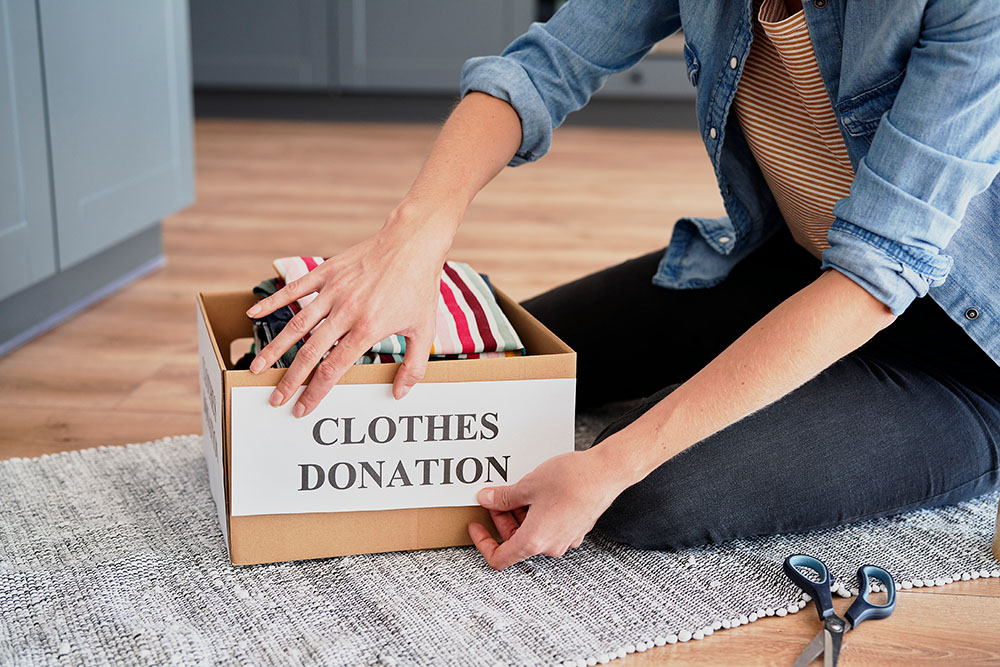
The question of where your darling’s things end up is complex, but not impossible to figure out. Some things cannot be donated and must be thrown out (underwear for example – but if it makes you happy to turn them into cleaning rags, go ahead!)
I’ve always known that homeless shelters desperately need socks, and my husband always bought quality socks, so it makes me happy to know that someone walking around Hamilton on a cold winter’s day has toasty feet because they’re wearing Peter’s socks! Clinics and health care professionals can often use medical equipment and unopened sterile supplies (and I had a ready-made supply of masks when the pandemic started.) School Shop classes can use tools and several places still accept books. Connect with friends who can help you brainstorm suitable places to donate things, get on a ‘Buy Nothing’ group or call charities you care about to ask what they need the most. You may be surprised by how many possessions gain new purpose in the right new place!
For more personal items, one thing I learned by trial and error was “When in doubt, wait!” I learned this by giving away things too soon, and also by finding out that in time, often the perfect solution would reveal itself. Things that early on I would have found painful to let go of, when the right occasion arose were not hard at all. I lingered over some of Peter’s most personal clothing, in particular, his ties, but when my beloved niece married the stand-up guy she’d been with for ten years, it felt completely natural to offer him his choice of Uncle Peter’s ties as a sentimental wedding present.
Another dear friend with a sore knee was able to make use of his bike and started a wonderful low-impact fitness regime with it! And a third was thrilled to have the table top hockey game I’d given Peter for his last Christmas find a home in his ‘fan shrine’ in the basement. All three of these gifts would have made Peter very happy, of that I’m sure! And to me, they felt right and brought me happiness instead of pain.
A lifetime of memories is contained in the ‘things’ we gather around us and letting go of them, finding them new homes and ‘keeping the gifts moving’ doesn’t have to be painful. Over time, it can even bring you comfort, joy and a sense of peace. Good Luck!
Thank you so much for sharing this. Your thoughts do not remove the pain but they do provide comfort and practical advice. Many men will walk through Hamilton feeling warmer in one of Roy’s many coats and jackets.
Paul, thank you for your words. I will also gain comfort at the thought of Roy’s coats keeping folks warm…